
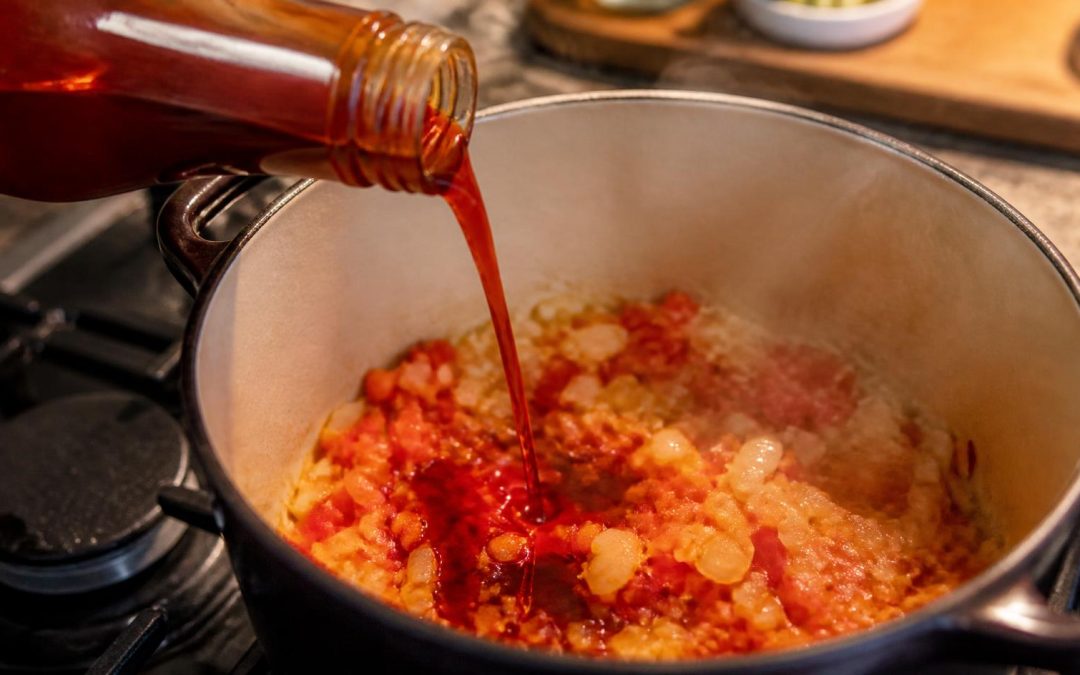
Quick answer: 100% natural Nigerian palm oil is red oil pressed from the pulp of the oil palm fruit, with nothing added and nothing taken away. It is made by boiling fresh palm fruit, pounding it, then skimming and drying the oil. “Undiluted” means it is not blended with cheaper oils, and “no colouring” means its red comes only from the fruit’s natural carotenes. OlaPantry’s palm oil meets all three tests and is packed to UK food standards.
“100% natural” gets printed on almost everything these days, so it is fair to ask what it actually means on a bottle of palm oil. For a product that has a real history of being stretched with cheaper oils and, in the worst cases, dyed with illegal colourings, the answer matters.
In this guide I’ll walk you through what natural Nigerian palm oil is, how it gets from a fresh fruit bunch to the bottle in your cupboard, and exactly what we mean at OlaPantry when we say undiluted and no colouring.
What is 100% natural Nigerian palm oil?
100% natural Nigerian palm oil is unrefined oil pressed from the fleshy outer pulp of the oil palm fruit, grown and processed in Nigeria, with no other oils, colours or additives mixed in. It is the same red oil Nigerian families have cooked with for generations, known in Yoruba as epo pupa.
The fruit comes from Elaeis guineensis, the African oil palm, which the Wikipedia page on the oil palm describes as native to west and southwest Africa, between Angola and The Gambia. Each fruit holds two different oils. The red palm oil we cook with comes from the soft pulp. Palm kernel oil comes from the hard nut inside, and it is a separate, pale product used mostly in processing and soap.
The colour is the giveaway. As the Wikipedia article on palm oil puts it, palm oil is “naturally reddish in color because of a high beta-carotene content.” Refining strips those carotenes out, which is why refined palm oil is pale. If an oil is natural and unrefined, it will be red.
Most Nigerian palm oil is still made close to the farm. The Nigerian government has stated that smallholders produce over 80 per cent of the country’s palm oil, much of it using the traditional methods described below.
How is Nigerian palm oil made, from fresh fruit bunch to bottle?
Nigerian palm oil is made in seven stages: harvesting the fruit bunches, separating the fruit, boiling it, pounding it, washing the oil out with water, skimming and drying the oil, then settling and packing it. Speed matters at every step, because fresh fruit starts to spoil within hours of being cut or bruised.
The Food and Agriculture Organization’s guide to palm oil processing stages explains why. In fresh, undamaged fruit, the free fatty acid content of the oil is below 0.3 per cent. In bruised fruit, it can rise rapidly to 60 per cent in the damaged part within an hour. High free fatty acids make oil taste sour and go stale faster, which is why the FAO recommends processing fruit within 48 hours of harvest.
Here is how the process typically runs in a small Nigerian mill or village processing site:
- Harvesting. Ripe fruit bunches are cut from the palm. A single bunch can weigh anywhere from 5 to 30kg.
- Separating the fruit. The bunches are left briefly so the fruitlets loosen, then the fruit is stripped from the stalks by hand or with a thresher.
- Boiling. The fruitlets are boiled in water. This softens the pulp and loosens the nuts so the oil can be released.
- Pounding. The cooked fruit is pounded in a mortar or crushed in a digester to break open the oil-bearing cells. The FAO notes this is the most labour-intensive step of all.
- Washing the oil out. Water is added to the mash. Fibre and nuts are removed, often squeezed by hand in small baskets, leaving a mixture of oil and water.
- Skimming and drying. The mixture is boiled and the oil that rises to the top is skimmed off. It is then heated gently to drive off the last of the water, which helps it keep.
- Settling and packing. The finished oil is left to settle, strained, and packed.
At no point in that list is anything added. The water used for washing is boiled away, and what is left is pure oil from the fruit. That is the whole recipe.
At OlaPantry, the final stage includes packing to UK food standards, with each bottle carrying its origin, best-before date and a batch number so it can be traced back to its source.
How does traditional processing compare with mill processing?
Traditional and small mill methods both produce natural, unrefined red palm oil. The main difference is how much oil they recover from the fruit, not the purity of the oil. Industrial refining is the step that changes the product, because it removes the colour, aroma and flavour.
The FAO’s chapter on traditional palm oil techniques compares the presses used across West Africa, including many developed and adopted in Nigeria.
| Method | How the oil is released | Oil recovered (FAO figures) | Is the result natural red oil? |
|---|---|---|---|
| Hand pounding and skimming | Mortar, water and hand skimming | Varies by processor, no single FAO figure | Yes |
| Spindle press | Small manual press | 60 to 70% | Yes |
| Motorised screw press | Powered press | 75 to 80% | Yes |
| Hydraulic press | Manual or powered hydraulic press | 80 to 87% | Yes |
| Industrial refinery (RBD) | Refined, bleached and deodorised | Not applicable | No, colour and flavour removed |
So a natural palm oil does not have to come from a mortar and pestle. Presses simply get more oil out of the same fruit. What makes oil natural is the absence of refining, blending and colouring.
What does “undiluted” palm oil mean?
Undiluted palm oil means the bottle contains only palm oil, with no cheaper vegetable oil blended in to bulk it out. Blending is tempting for sellers because palm oil costs more than many common cooking oils, and a mixed oil can still look red enough to pass at a glance.
You can often spot a blended oil at home. Pure palm oil melts at a much higher temperature than oils like sunflower or soya, so in a cool British kitchen it thickens and partly sets. A bottle that stays thin and runny all winter is a reason to ask questions. Blended oil also tends to taste flatter, without the earthy depth that makes egusi or efo riro taste right.
When we say our oil is undiluted, we mean every drop in the bottle came from palm fruit. No top-ups, no blends.
What does “no colouring” mean, and why does it matter?
No colouring means the oil’s red comes only from the fruit’s natural carotenes, with no dye of any kind added. It matters because palm oil has a documented history of being coloured with illegal industrial dyes to make poor oil look richer.
Food Standards Agency guidance, published on NI Business Info’s Sudan dye guidance, explains that Sudan dyes are industrial colourings used in products like shoe polish and solvents, and that they are banned in food. It also states that since 2003, all imports of palm oil have had to be accompanied by test certificates showing they do not contain Sudan dyes.
Natural red palm oil has no need for any of that. Its colour is part of what it is. Be wary of oil that looks unusually bright, almost neon, or that leaves a stain that seems more like ink than oil.
Why does natural palm oil vary slightly from batch to batch?
Natural palm oil varies slightly between batches because it is an unrefined farm product, so its colour, thickness and aroma follow the fruit it was made from. Two bottles from different harvests can differ a little in shade, in how firmly they set in a cold cupboard, and in how strong the aroma is. A batch may also look cloudier at the bottom as the heavier fats settle in the cold.
None of this means anything is wrong. Refined oils look identical every time precisely because refining removes the natural character. With a traditional product, small differences are normal. What should never change is the smell: earthy and fresh, not sour or chemical. If a bottle ever seems off, contact us with the batch number and we will look into it.
How can you check a bottle is 100% natural?
The most reliable check is a full label from a registered UK food business, because no home test can prove an oil is dye-free. Your senses help, though. Look for these signs:
- Colour: deep orange to red, not neon bright.
- Smell: earthy and nutty, never sour, soapy or chemical.
- Texture: thickens or partly sets in the cold.
- Label: product name, ingredients, country of origin, best-before date and batch number.
- Seller: a business with a registered name, address and food registration you can verify.
Every OlaPantry bottle carries the full set of label details listed on our food safety commitments, including a batch number that links it back to our sourcing and packing records.
We would rather show you than ask you to trust us. OlaPantry is run by OLAKIN LIMITED, Companies House number 16909792. Our food business is registered with Huntingdonshire District Council’s Environmental Health team and Cambridgeshire County Council’s Trading Standards, under reference KHE1HR-5D8PNK-N7HDBD. The full story is on our about us page.
Where can you buy 100% natural Nigerian palm oil in the UK?
You can buy 100% natural Nigerian palm oil online from OlaPantry, in 1L, 2L and 5L bottles delivered anywhere in the UK. Prices start at £5.99 for a litre, and the larger sizes work out cheaper per litre for families who cook Nigerian food every week.
Our 100% natural Nigerian palm oil is sent by Royal Mail. Orders are processed within 1 to 2 working days, with standard delivery taking 2 to 4 working days, as set out in our delivery and shipping policy.
The bottom line
100% natural Nigerian palm oil is simple: fruit, heat, water and time, with nothing added and nothing refined away. Undiluted means no blending. No colouring means the red is the fruit’s own. And a clear label with a batch number and a registered business behind it is how you know both are true.
If that is the kind of palm oil you want in your kitchen, see what’s in our shop and pick the size that suits your household.