
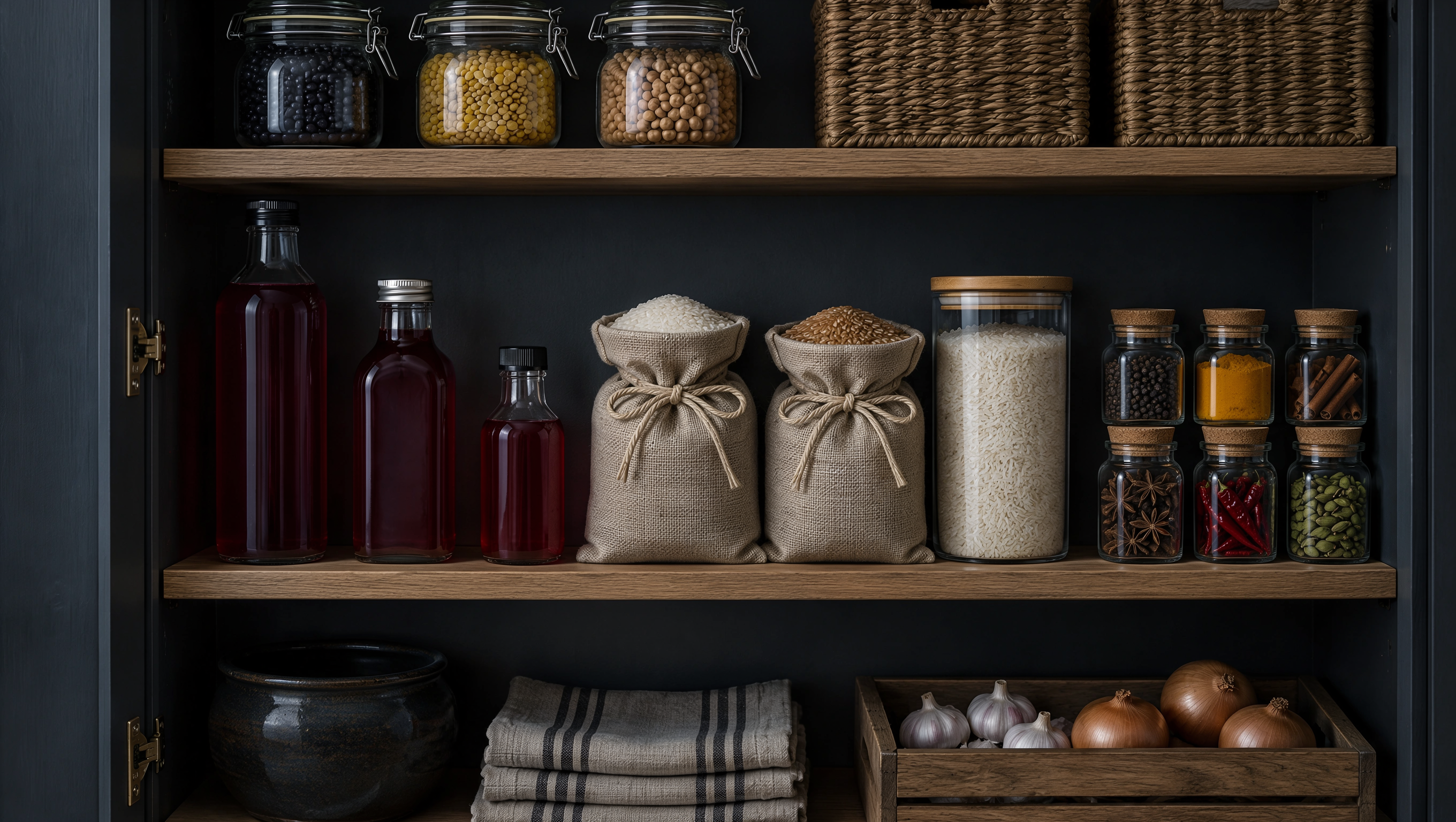
Quick answer: Store palm oil in a cool, dark cupboard, in a sealed, non-transparent container, away from the hob and any sunny window, and always use a clean, dry spoon. Light, heat, air and water are what make palm oil go stale. Research on crude palm oil kept in the dark at 20 to 25°C estimated a shelf life of about 6 months, and the fridge can stretch that further. At OlaPantry, every bottle carries a best-before date and batch number so you know exactly how fresh it is.
OlaPantry is run by Olayinka and is registered in the UK as Olakin Limited, Company Number 16909792, verifiable on the Companies House registry. We sell 100% natural, undiluted Nigerian palm oil, packed to UK food standards and traceable by batch number. This guide explains what makes palm oil go stale and how to store it so it stays fresh for months, whatever your kitchen looks like.
What makes palm oil go stale?
Palm oil goes stale through a process called rancidification, which is driven by oxygen, water, heat and light. The Wikipedia article on rancidification describes it as the breakdown of fats by oxidation or hydrolysis.
Two types matter most in a home kitchen:
- Oxidative rancidity: oxygen in the air reacts with the oil. Heat and light speed this up.
- Hydrolytic rancidity: water breaks the fats down, releasing sour, off-flavoured compounds.
The same article’s advice for slowing it down is simple: keep oils in a cool, dark place, in light-proof packaging, with as little air as possible. Every tip below comes back to those four enemies: light, heat, air and water.
How long does palm oil stay fresh?
Unrefined palm oil stays fresh for roughly 6 months when stored in the dark at normal room temperature. A 2018 study in Food Science and Technology, testing palm oil storage conditions over 12 months, estimated that crude palm oil kept in the dark at 20 to 25°C had a shelf life of about 6 months. Oil kept at 26 to 32°C in natural light oxidised much faster.
Your bottle’s best-before date is the practical guide. As the food safety body safefood explains in its guide to best before and use by dates, a best-before date tells you when quality may start to decline, and it only holds if you store the food as the label says.
How does light affect palm oil?
Light speeds up oxidation and fades palm oil’s natural colour. A study published in the North African Journal of Food and Nutrition Research looked at sunlight and packaging effects on edible oils, including palm oil. Over 30 days, oil exposed to direct sunlight for 8 hours a day had significantly higher peroxide values, a marker of oxidation, than oil kept in a dark cupboard. Its colour also faded as the carotenes broke down.
The same study found that packaging made a real difference. Oil in clear, see-through plastic bottles deteriorated the most. Non-transparent plastic and brown glass bottles gave much better protection.
How does heat affect palm oil?
Heat speeds up every reaction that makes oil go stale, so warmer storage means a shorter life. In the 2018 study, crude palm oil stored at 26 to 32°C in natural light lost about two-thirds of its carotenoids over 12 months, dropping from around 767 to 252 ppm. Oil in the fridge kept far more.
That is why the study’s authors recommend refrigeration for long-term storage. In practice, the fridge is a good option if you buy a 5L container or cook with palm oil only occasionally. The trade-off is that the oil sets hard, so you will need to warm it before pouring. Our guide on why palm oil goes solid explains how to melt it safely.
How do air and moisture affect palm oil?
Air and moisture shorten palm oil’s life every time the bottle is opened. Oxygen drives oxidation, and even a few drops of water can start hydrolytic rancidity. Four habits help:
- Screw the cap on tightly straight after use.
- Always use a clean, dry spoon, never one that has touched water or food.
- Do not pour unused oil from the pan back into the bottle.
- If you buy a large container, decant a week’s supply into a smaller bottle so the main container stays sealed.
Which container is best for storing palm oil?
The best container for palm oil is a sealed, non-transparent bottle or a dark glass jar with a tight lid. Keep it in the original bottle if it is opaque, because that also keeps the label, best-before date and batch number with the oil. If your bottle is clear, store it somewhere fully dark.
Every OlaPantry bottle carries its origin, storage guidance, best-before date and batch number, as set out on our food labelling standards. Our food business is registered with Huntingdonshire District Council and Cambridgeshire County Council under reference KHE1HR-5D8PNK-N7HDBD.
Where should you store palm oil in your kitchen?
The best place depends on your kitchen, but the rule is always the same: cool, dark and away from heat. Here is how to apply it to different setups.
| Kitchen setup | Best spot | Avoid | Tip |
|---|---|---|---|
| Small flat or shared kitchen | Closed cupboard furthest from the hob | Open shelves and the top of the fridge | Keep the bottle in a closed bag or box if cupboard space is tight |
| Family kitchen with a pantry | Pantry or utility room shelf | Shelves near a boiler or tumble dryer | A cooler room means firmer oil, so warm it before pouring |
| Kitchen with a sunny window | Lower cupboard on the shady side | Worktops and windowsills | Clear bottles fade fastest in sunlight |
| Buying 5L in bulk | Fridge for the main container, cupboard for a small bottle | Opening the big container daily | Decant weekly to limit air and warming |
| Occasional cooking | Fridge | A warm cupboard for many months | Check the best-before date before each use |
How can you tell if stored palm oil has gone off?
You can tell palm oil has gone off by its smell and taste. Fresh oil smells earthy and nutty. Stale oil smells sour, soapy or like old crayons, and may taste sharp or bitter. A faded, dull colour is another sign that the oil has oxidised.
If a newly bought bottle smells off, that may point to poor quality rather than storage. Our guide on how to spot adulterated palm oil covers the warning signs.
The bottom line
To keep palm oil fresh for months, protect it from light, heat, air and water. Store it sealed, in a non-transparent bottle, in a cool, dark cupboard. Use a clean, dry spoon, and move it to the fridge if you buy in bulk or cook with it rarely. For more on buying and cooking with it, see our Nigerian palm oil guide.
Want palm oil that arrives fresh and stays that way? Pick up OlaPantry’s Nigerian palm oil with a clear best-before date and batch number on every bottle, delivered anywhere in the UK.